

7 min read

What Nine Months Away from The vRad Platform Taught Me as a Teleradiologist

Back to Blog
What Nine Months Away from The vRad Platform Taught Me as a Teleradiologist
14:31

Key takeaways

  • After years working at vRad, I took an enticing private practice offer and learned compensation was only part of the equation. The downside was a disjointed radiology workflow built around three separate systems instead of one unified platform and a more stressful work environment.
  • The vRad Platform brings RIS, PACS, voice recognition, support, STATdx and AI into one truly integrated radiology workflow, with one log-in, fewer interruptions and support that keeps your eyes on images and non-clinical tasks moving in the background. It keeps radiology fun.
  • vRad's shared radiology worklist, supported by 100+ radiologists on shift during high-volume nights, prioritizes studies by patient need and routes cases by radiologist case-mix preferences. This allows me to step away mid-shift when I need a break and does not create a personal backlog.

When I told vRad, the largest teleradiology practice in the U.S., that I wanted to try something else, we worked out a way for me to remain part time with them with one foot in the door in case things did not work out with the new job. Well, the new job was not 'all that' and I'm glad I promptly was able to return to vRad.

I finished my fellowship in 1995 and have been working in private practices since before PACS existed. I had been working at vRad since 2010 and things were going well. I was happy. Then, like a lot of radiologists, I was flooded with job offers nearly every day and still receive about five offers per week as you read this blog. I accepted an offer through a radiologist friend I trusted, and it was compelling enough to take a closer look. Nine months later, I was back at vRad.

Why I left vRad for a private practice offer

I took the private practice offer because it was financially enticing and came from a friend who was working there. The money was good, and they delivered exactly what they promised so compensation was never the issue. If anything, that made the decision harder to evaluate: the offer looked solid, the people seemed credible and everybody was nice, I was told the platform was integrated, and nothing felt misleading.

Three separate systems, and what that cost me

Most radiology job offers describe the reading setup in a single line: here is our PACS, here is our dictation software, and yes, they are integrated. In practice it is rarely that tidy. My new role ran on three separate systems which meant I was constantly moving between EPIC, PACS, and dictation. They were not nearly as seamless, user-friendly, or efficient as The vRad Platform. As a result, my productivity dropped by about half.

The job was salaried rather than productivity based, so the productivity drop did not cost me financially. But it changed everything else about my day. Every study carried more friction than necessary and across a nine-hour shift that friction became a weight I could not get out from under.

I stayed for nine months. I kept thinking I'd find the flow, that I'd get more efficient, but it didn't improve. The stress wasn't worth what they were paying me. My fiancée noticed the change in me before I admitted it. That job took the fun out of reading, and I like radiology. I enjoy helping patients and solving complex cases.

The vRad Platform vs. multiple disconnected systems

Two things brought me back to vRad: the quality hassle-free workflow and the support system I had lost.

The platform at the other practice was described to me as integrated; I suspect a lot of radiologists have been sold on that same idea. But if your day involves logging onto more than one system, bouncing between screens, or even moving between workstations to get one study read, that is not integration. It is worth knowing there is something better.

On The vRad Platform, RIS, PACS, voice recognition, support, STATdx and AI are part of one unified system. I read for a lot of hospitals in many states, but I have one login and my own custom settings. Behind that platform is a support team chasing down old reports, missing images and critical calls, so I can keep reading instead of managing the workflow myself.

  • A worklist I never have to triage. AI prioritizes the list by patient need, flagging 19 critical pathologies, and cases are assigned by skillset, so there is no cherry-picking and nothing for me to sort.
  • Cases that open when I click them. Images are pre-cached, and the report arrives with demographics and procedure information already populated.
  • Dictation that works the way I want it to. Templates and macros, color coding I choose so anything I add to a template stands out, and duplicated phrases flagged before they ever reach a report. One click formats my findings by organ structure and checks reporting and billing requirements, including left and right discrepancies. In basic terms, working on The vRad Platform is incredibly user friendly with a quick learning curve. And if you need efficiency help, vRad's on-boarding team is there to take your hand, work with you one-on-one and teach it to you like the ABCs.
  • Support staff who keep me on the images. Old reports, missing sequences, missing images, more history, critical calls and the non-critical ones where I want to talk a case through with a clinician. One click, and a colored tab tells me when it has been handled.
  • A colleague a few clicks away. Subspecialist consults built into the platform, images reviewed live together, or a case transferred if it is not right for me.
  • Help at three in the morning. U.S.-based tech support, 24/7/365, over live chat, and they can remote into my workstation if it comes to that.
  • When the shift ends, it ends. No one expects me to read faster, stay late, or clear the worklist before I sign off.

The support staff deserve their own shout-out. For me, they have wings. They're angels with a very tough job, and all I have to do is click a button and keep reading.

The other thing I'd taken for granted is what vRad doesn't track: how fast you read. If you're fast, work at your pace. If you're slow, no one is hounding you. vRad emphasizes quality and not quantity.

Taking a break: an individual worklist vs. a shared worklist

At the other practice, the list was mine. I worked nine-hour shifts where everyone was salaried, so every radiologist was paid the same no matter how much or how little they read. If I took a fifteen-minute break, I came back to a list that was overwhelming and I felt obligated, by my own work ethic and by the patients waiting on it, to dig back out. A real dinner break was out of the question.

One of the things I love about vRad is that stepping away during a shift is virtually guilt-free, and even encouraged, so I stay fresh. Patients are not waiting on me, and I am not paying for a break with a backlog.

Remote, but never alone: the people at vRad

Teleradiology can be solitary work, but the relationships I've built at vRad are what keep it from feeling that way. You read with the same support staff for years. Radiologists consult with each other. Once a year there is both a free CME winter conference at a lovely destination such as Florida or Arizona and an additional retreat in Minneapolis. Those experiences feel like a college reunion with people you have worked with for years and perhaps never met in person.

You might hear my colleagues say it is the people at vRad as much as the technology that make it such a good place to practice. I feel the same way. I have never encountered anybody at vRad who is toxic or malignant. There's no backstabbing, it's not cutthroat. It's a friendly, collegial, supportive atmosphere and I haven't seen that anywhere else since my training.

Flexibility: the control I have over my income

Offers from other practices can look tempting on paper and in some ways they are. What I did not fully appreciate until I came back was how much control I have at vRad. The financial flexibility is hard to match: if you are starting a family, paying for college, or saving for a house, you can choose to take on more hours. For me, a Tahoe winter storm dropped six to nine feet of snow in three days which produced a lot of wear and tear on my house. My garage floor had to be jackhammered out and resurfaced that spring. I knew the expense was coming and could plan for it by picking up extra shifts or staying late, which are always paid at a bonus rate. My son is getting married and this past summer I worked extra shifts and in 1-2 months saved enough for a very nice wedding and gift.

Questions to ask before taking a teleradiology job

My advice to anyone considering a change in practice, private or teleradiology: scrutinize the reading environment as closely as you scrutinize the offer. These are the questions I would ask, and what the answers look like at vRad.

How many systems will I have to bounce between to do my job?

At the other practice I moved between three: EPIC, PACS and dictation. On The vRad Platform, RIS, PACS, voice recognition, support, STATdx and AI are part of one unified system with a single login. If a practice says its systems are integrated, ask them to walk you through a demo and watch how many screens it takes to read one study, or how often you find your eyes bouncing off of the images.

Who chases down priors and makes phone calls?

At vRad, a support team handles old reports, missing sequences, missing images, additional history, and both critical and non-critical calls with clinicians. One click, and a colored tab tells me when it has been handled, so I keep reading instead of managing the workflow myself.

Is the worklist shared or individual? How does the practice prevent a personal backlog?

vRad’s shared worklist prevents personal backlogs by placing studies into one practice-wide queue rather than assigning each radiologist a private list. Cases are prioritized by patient need and routed based on urgency, AI findings, licensing, credentialing, workload, subspecialty needs and case-mix preferences, so the worklist keeps moving even when one radiologist takes a break or ends a shift.

Does the group care how fast I read, or will there be pressure when volume ticks up?

vRad does not track how fast you read. If you are fast, you work at your pace. If you are slow, no one is hounding you. vRad emphasizes quality and not quantity, and no one expects me to read faster, stay late, or clear the worklist before I sign off.

Can I take a break whenever I want?

Stepping away during a shift at vRad is virtually guilt-free and even encouraged, so I stay fresh. Because the worklist is shared, patients are not waiting on me and I am not paying for a break with a backlog.

I didn't ask those questions before I took the offer, and they turned out to matter more than the compensation did. vRad is transparent, so ask away. Our physician recruiters will happily walk you through the platform and the schedule or join our next Ask Us Anything webinar on Oct. 27, 2026, where vRad Chief Medical Officer Benjamin Strong, MD, Medical Director Jonathon Lee, MD, and Sr. Director of Physician Recruitment Henry Junkert answer questions live. Register here. 

I already know what the other side looks like. I don't need to see it twice. I'm back at vRad, I see the near daily lucrative offers from other practices, and plan to remain with vRad until I retire.


About the author

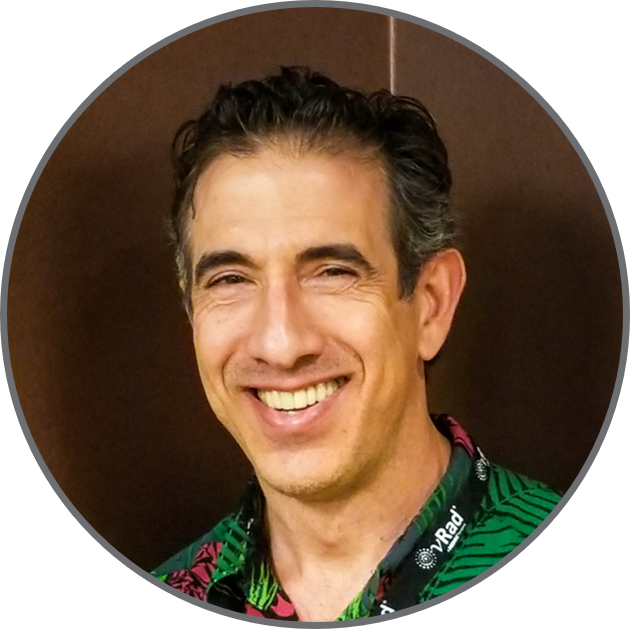
Jim Sloves, MD, has been a vRad radiologist since 2010. He completed a cross-sectional imaging fellowship at Johns Hopkins University and his residency at North Shore University Hospital, and reads musculoskeletal and body imaging.

Back to Blog
I Left vRad. This Is Why I Came Back

1 min read

I Left vRad. This Is Why I Came Back

After 11 years as a vRad radiologist – 3 of them as Clinical Chief of Abdominal Imaging – I left in 2019 for a teleradiology position at another...
Read More
6 Questions Every Radiologist Should Ask Before Reading Remotely

1 min read

6 Questions Every Radiologist Should Ask Before Reading Remotely

Radiologists are looking for more work-life balance. In response, practices of all sizes have been letting rads read from home. But here’s the catch....
Read More
Being a Teleradiologist Was a Nightmare at First, but Now It’s My Dream Job

1 min read

Being a Teleradiologist Was a Nightmare at First, but Now It’s My Dream Job

Practicing in teleradiology is amazing, or it’s your worst nightmare.How do I know? Because I’ve been in two telerad positions that couldn’t have...

Read More