

Does Wellness have a Place at Work?

My answer is YES!  Every year you see more articles about wellness at work and that more companies are taking an active role in their employees’ health? This is a hot topic that is not going to disappear anytime soon. These wellness programs are put into place for a variety of reasons and are beneficial for the company and employees.

Wellness Programs Cut the Cost of Health Care

A big concern for a lot of businesses today is the rising cost of health care, and a lot of companies over time have to pass that cost down to the employees. By working with the insurance carriers and putting various wellness programs in place, companies hope to keep the health plan cost down, and can continue providing affordable health coverage to employees.

Healthy Employees are Happy Employees

Another benefit is that healthy employees are happy employees – which lead to higher job satisfaction and productivity!  Employees benefit by learning how to live a healthier lifestyle, which increases their overall quality of life. We spend a good portion of our time at work, and having a culture that emphasizes wellness is a great support system. These wellness programs motivate and engage employees in establishing healthy habits. At vRad we offer onsite health assessments once a year, flu shots, wellness seminars and a variety of fitness and nutrition challenges throughout the year. The benefits the employees receive from taking an active role in their health are priceless. 

How does your company support healthy habits?

Posted in Health | Tagged , , , , , , , | Leave a comment

ACR Guidelines: Impression

One could argue that in terms of direct patient care, the Impression section of the ACR guidelines is the most important of any radiology report. Although the Findings section can be viewed as a “laundry list” describing the normal structures evaluated and any abnormalities identified, the Impression section is the summary that will guide the care of the patient.

The Impression should include the following information, usually listed in descending order of importance:

  1. Any abnormality that might account for the submitted reason for exam (positive for appendicitis, left lower lobe pneumonia, intracranial hemorrhage).
  2. All pertinent normal findings, usually as determined by the submitted reason for exam (negative for pulmonary embolism, no evidence for renal or ureteral stones).
  3. All findings that might be unrelated to the patient’s current problem but are, or could be, important to the care of the patient (abdominal aortic aneurysm, lung nodule, indeterminate renal lesion, small adrenal mass).
  4. Recommendations for additional studies (MRI abdomen to better evaluate a liver mass, ultrasound pelvis to characterize an ovarian cyst).
  5. Recommendations for follow-up (CT chest should be repeated in 6 months).
  6. Any significant patient reaction should be reported.

Although it is hoped that the referring physician will read the entire radiology report, it should not be assumed that each abnormality mentioned under Findings will be noted.  The impression should clearly note all findings that are important to the care of the patient, either acutely or as an important incidental finding, provide a differential diagnosis if the definitive cause cannot be determined from the imaging findings alone, and direct the ordering physician to appropriate additional imaging modalities or follow-up as needed.

Posted in Patient Care, Radiology | Tagged , , , , , , , | Leave a comment

Video: Radiology Practice of the Future

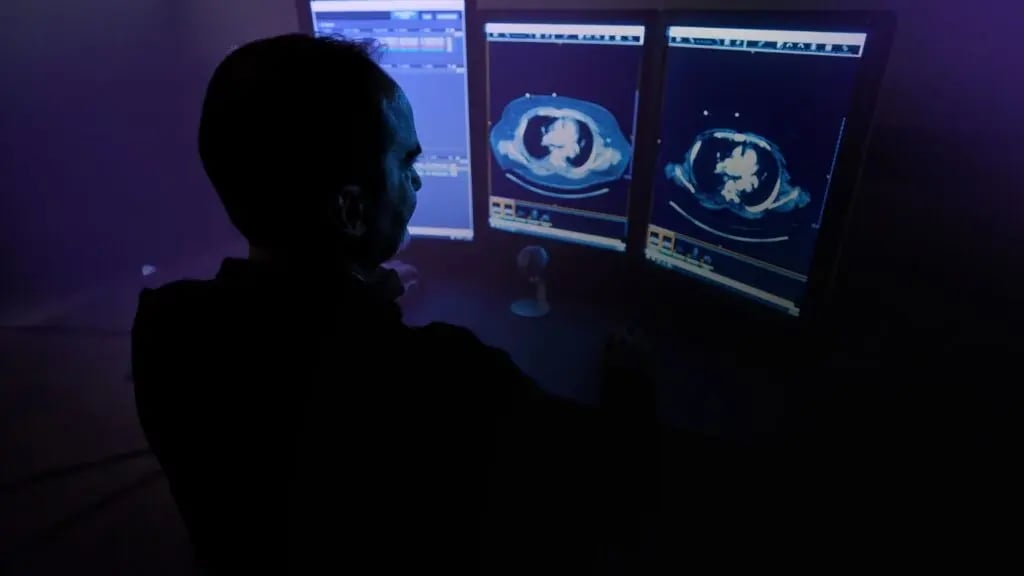
Dr. Samir Shah expects subspecialized care to become more and more important in the future. He also envisions radiologists becoming more reliant on specialized radiology assistants to help with the complexities of reading in today’s environment. Radiology assistants would help with distributing cases to the right people and making sure prior images and reports are available.

Posted in Patient Care, Videos | Tagged , , , , , , | Leave a comment

Video: Radiology Collaboration

There is a great deal of collaboration, according to Dr. Benjamin Strong. Dr. Strong believes there is more collaboration at vRad than in any other practice model he’s worked in, including private and academic settings. To confer on a case requires physically relocating the radiologist or the film, or making phone calls. On vRad’s current system, radiologists use instant messaging. At midnight there are typically over 70 radiologists working online and 70 people to consult with. Dr. Strong says it’s been an educational experience and has helped to improve search patterns and sensitivity as well as broaden differentials.

Posted in Patient Care, Physicians, Radiology, Telehealth, Videos, vRad | Tagged , , , , , , | Leave a comment